6.1 Statistical Model
A statistical model is a set of one or more probabilistic models whose purpose is to model the systems of interest in terms of their characteristics. Thus, two fundamental components in a statistical model are:
1) set of observations of the variable of interest or realizations of that random variable;
2) family of associated probability distributions;
We assume that a member of this family of distributions is adequate to describe the observations and statistical inference aims to assist, based on a sample, the identification of this member.
Formulation of a statistical model
A recurring problem in science consists of trying to express one or more variables, called response variables. $y$ as a function of a set of other variables, called explanatory variables $x$. In this way, the effect of $x$ about $y$ can be expressed through a mathematical model of the type $$y = f(x)$$
Often, for various reasons, this relationship is not perfect. In practice, $f(x)$ just approaches $y$ and, therefore, equality does not occur considering only the variables $x$. A common situation is that, in addition to $x$, numerous other characteristics also affect $y$. Thus, the joint effect of these characteristics is grouped into another variable $\epsilon$ called an error. It is considered that the joint effect of these characteristics is added to the effect of $x$, so that the model that expresses the relationship between $y$ and $x$ has the shape $$y = f(x) + \epsilon \quad$$ $$\hbox{em que} \ \epsilon \ \hbox{é o efeito do erro}.$$
When expressing the model in this way, it is therefore assumed that the joint effect is additive. It is also important to note that with this configuration, it is not possible to study the effect of $x$ in isolation.
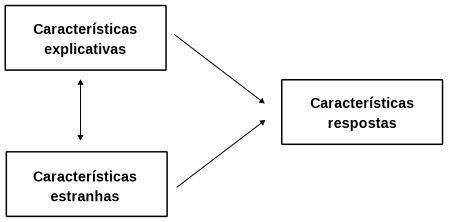
Figure 6.1.2: Statistical model flowchart
The collection of variables that make up $\epsilon$ are unobservable (although we must have an idea of the elements that act on it). This gives it the idea of randomness and, therefore, makes the response variable a random variable. In this way, the randomness of $y$ causes the model to stop being called a mathematical model and start being called a statistical model.
The choice of model will depend on several factors, in particular how $x$ related to $y$, the nature of $x$ and assumptions about error. However, when a model of the type $y = f(x) + \epsilon$ is established, the problem will be stated in statistical terms. And, finally, the quality of the statistical analyzes carried out is due to the adequacy of the specified model.