On this page
Book
23 Analytical Method Validation
The objective of method validation is to ensure that the analytical methodology is accurate, precise, stable, reproducible and flexible over a specific range of a substance under analysis. Here, we need to ensure that routine analyzes reproduce values consistent with the reference value. Therefore, the method is considered validated if its characteristics are in accordance with the established requirements, that is, there is no difference between the experiments that determine the studied parameters and validation.
The development of analytical methods requires us to estimate the efficiency of the evaluation process in the laboratory routine. Regulatory bodies such as ANVISA (National Health Surveillance Agency), MAPA (Ministry of Agriculture, Livestock and Supply) and INMETRO (National Institute of Metrology, Quality and Technology) require audited companies to validate methods. INMETRO specifically, in addition to method validation parameters, requires proficiency testing (interlaboratory comparison, for more details see the proficiency testing content). In general, the analytical methodology validation procedure can be represented by the following flowchart:
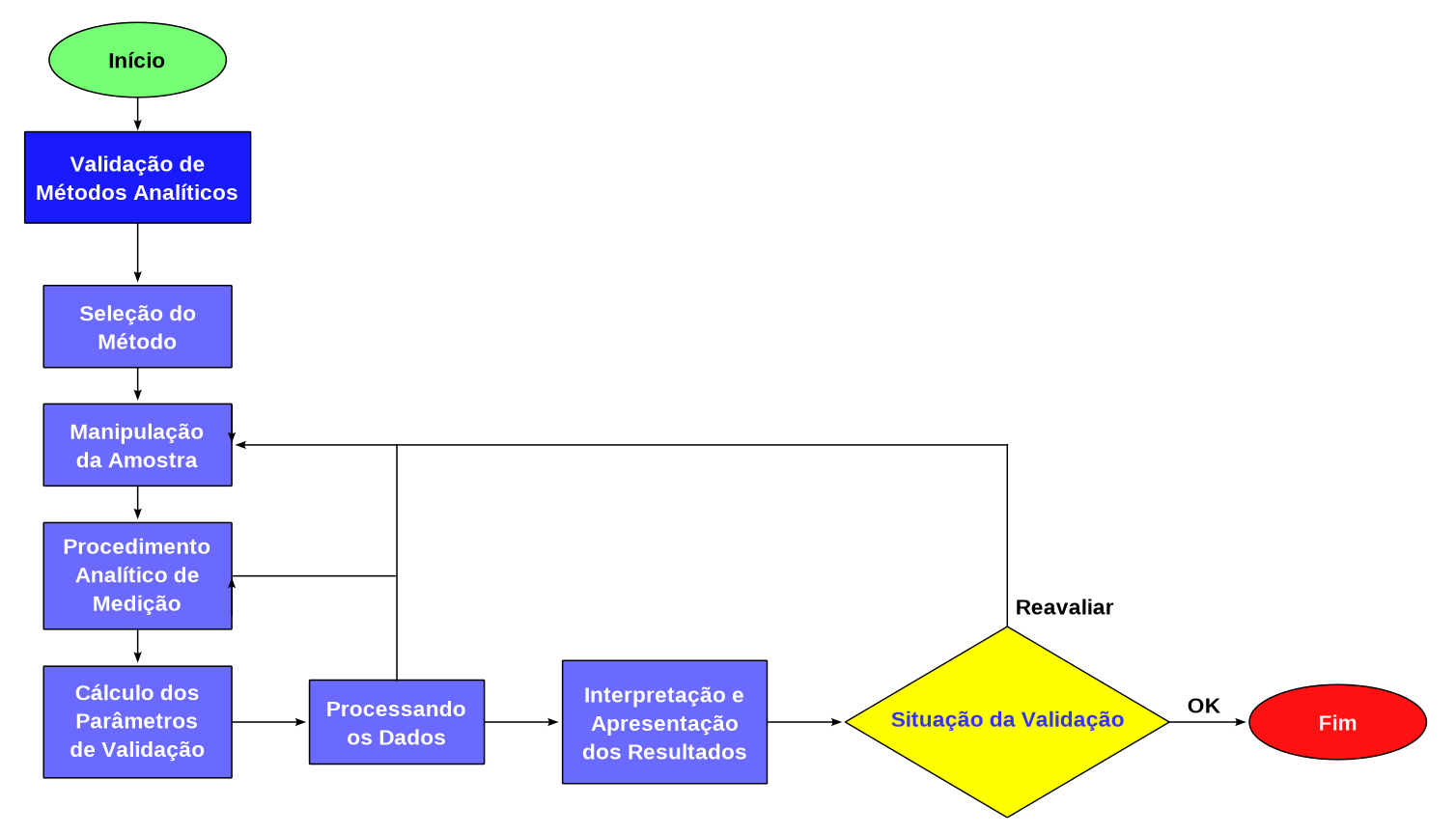
Figure 23.1: Flowchart of the analytical methodology validation validation procedure
However, the definitions, parameters, experiments, calculations and criteria related to the validation of the analytical methodology may differ according to the regulatory body. In the resulting sections, we describe in detail the key points related to each organ.
RDC 166/17 (ANVISA): Resolution of the Collegiate Board
On July 24, 2017, the Collegiate Board of the National Health Surveillance Agency (ANVISA) published the Collegiate Board Resolution - RDC nº 166/17 (RDC Nº 166/2017). This resolution aims to establish criteria for the validation of analytical methods used in pharmaceutical inputs, medicines and biological products in all their production phases. In this context, the resolution defines analytical validation as the systematic evaluation of a method through experimental trials in order to confirm and provide objective evidence that the specific requirements for its intended use are met. The objective of validation is to demonstrate that the analytical method produces reliable results and is suitable for its intended purpose, in a documented manner and using objective criteria. The parameters to be evaluated in the analytical methodology study vary according to the type of validation and the type of assay. If the methodology is not described in an official compendium, the full analytical validation, according to the parameters established in the following table.
| Evaluated Parameter | Identification | Impurities Test | Impurities Test | Dosage |
|---|---|---|---|---|
| Quantitative | Limit Test | |||
| Accuracy | no | yes | no | yes |
| Repetitiveness | no | yes | no | yes |
| Intermediate Accuracy | no | yes(1) | no | yes(1) |
| Selectivity | yes | yes | yes | yes |
| Detection Limit | no | no(3) | yes | no |
| Limit of Quantification | no | yes | no | no(3) |
| Linearity | no | yes | no | yes |
| Interval | no | yes | no | yes |
Table 23.1: Validation parameters. * Dissolution (quantification), uniformity of content and potency.
(1) In cases where reproducibility has been conducted, it is not necessary to conduct intermediate precision.
(2) In cases of identification tests, the combination of two or more analytical procedures may be necessary to achieve the necessary level of discrimination.
(3) May be necessary in some cases.
Another type of validation is the partial validation. RDC nº 166 defines partial validation as the demonstration, through some validation parameters, that the previously validated analytical method has the necessary characteristics to obtain results with the required quality, under the conditions in which it is practiced. This type of validation must evaluate, at least, the precision, accuracy and selectivity parameters. It must be applied in cases of compendial analytical methods and method transfer between laboratories.
In addition to complete and partial validation, RDC nº 166 defines a procedure to be carried out prior to an analytical run, named System Check. This study aims to demonstrate that the system is suitable for its intended use, and the parameters of this procedure must be defined during the development and validation of the method. It is recommended to perform a system check prior to each analytical run.
The revalidation of the methodology must be evaluated when there are: changes in the synthesis or obtaining of the active pharmaceutical ingredient; changes in the composition of the finished product and changes in the analytical method.
All equipment used in analytical validation must be calibrated and analysts must be qualified and adequately trained. The suitability of measuring equipment with the proposed methods must be assessed.
The documents presented must describe the procedures, analytical parameters and results in sufficient detail to enable their reproduction and statistical evaluation. Furthermore, the Statistical Protocol detailing the statistical methodology used must be presented.
In the following sections, we describe the parameters presented in Table 23.1. We discuss their definitions, as well as the associated statistical methodologies.