1.1 Introduction
Before we begin discussing the subject, we would like to make a small reflection, answering the following question:
Is your home television set reliable?
We had the opportunity to ask this question to several people and the answers were something like this:
“I believe so, I bought it about 10 years ago and it never had any problems”, or
“Yes, it has been working well for over 8 years”, or even
“No, it has already presented so many problems that I will no longer buy any product from the same brand!”
Obviously, different users may not only have different expectations regarding the durability of a product, but they may also have different opinions regarding what constitutes good functioning. Despite this, they are all familiar, even if unconsciously, with the concept of reliability, especially when it refers to household products such as television sets, computers or automobiles.
In general, the notion of reliability is intuitively associated with the degree of certainty that one has in the good functioning of a product over a long period of time. However, defining it this way, the concept presents a practical difficulty. From an engineering point of view, for example, it would be important to be able to guarantee the reliability of a product or its improvement. This task, however, would only be feasible if this degree of certainty could be measured in some acceptable way.
With the development and application of new technologies, especially in the production of complex military systems, pressure has increased for these practical issues to be resolved. Efforts in this direction resulted in the development of probabilistic and statistical methods for the practical treatment of industrial issues related to reliability, a characteristic that began to be formally expressed through the following definition:
“Reliability is the probability of a product performing its intended function for its specified life, under specified operating conditions, in a manner which meets or exceeds customer expectations."
In order to facilitate the understanding and practical application of this definition, three aspects need to be clear:
What is meant by good functioning of the product?
How long is the product expected to work well?
What are the conditions of use under which the product should work well?
What are customer needs and expectations?
The good functioning of a product is characterized by the quality of execution of the functions for which it was designed and developed. From the definition of the criterion for good functioning of the product, the criteria for failure and degraded functioning of the product are derived, which refer, respectively, to the total or partial inability to perform functions.
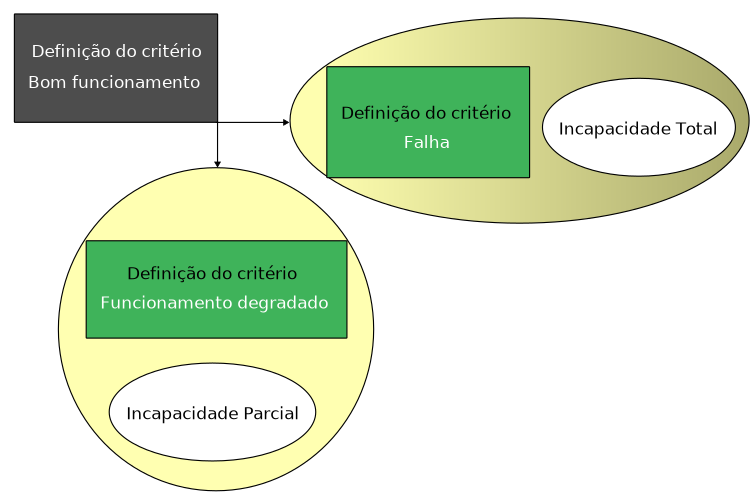
Figure 1.1.1: Representation of the operating criterion
It is obvious that due to the action of agents such as temperature, humidity, salinity, among others, every product will fail or function degraded at some point. For this reason, reliability refers to the good functioning of the product over a well-defined period of time.
It is important to highlight that due to wear or natural aging of a product, the criteria for good functioning of the product may change over time.
Consideration of the conditions of use is also of fundamental importance. Every product is designed and developed to be used under specific conditions, which may involve both environmental aspects and operational aspects.
Ultimately, reliability is a measure of a product’s ability to function well over a specified period of time, under pre-established conditions of use. The probabilistic nature of the definition also allows reliability to be given a formal treatment through statistical methods.
Reliability and Quality
In several aspects, the reliability of a product has an impact on consumer satisfaction. Buying a more reliable product could, for example, result in a lower total cost of use. A less reliable product will require more frequent maintenance interventions, the costs of which may negate the initial advantage of a lower acquisition cost. The product undergoing maintenance may also cause significant losses for the user and result in lost revenue.
On the other hand, for many products, such as automobiles, reliability depends on special care in their conservation or maintenance. These precautions are part of the conditions of use specified in the project and cannot, therefore, be ignored. Producers of goods of this type must, therefore, guarantee the consumer conditions that allow them to meet these requirements without this ending up becoming a problem.
Another important aspect is security. Failure of an airplane’s brake system, for example, can put passengers' lives at risk. Therefore, the greater the reliability of the brake system, the greater the reliability of the aircraft.
To exemplify what we have already discussed in relation to reliability and quality, let us look at the following diagram.
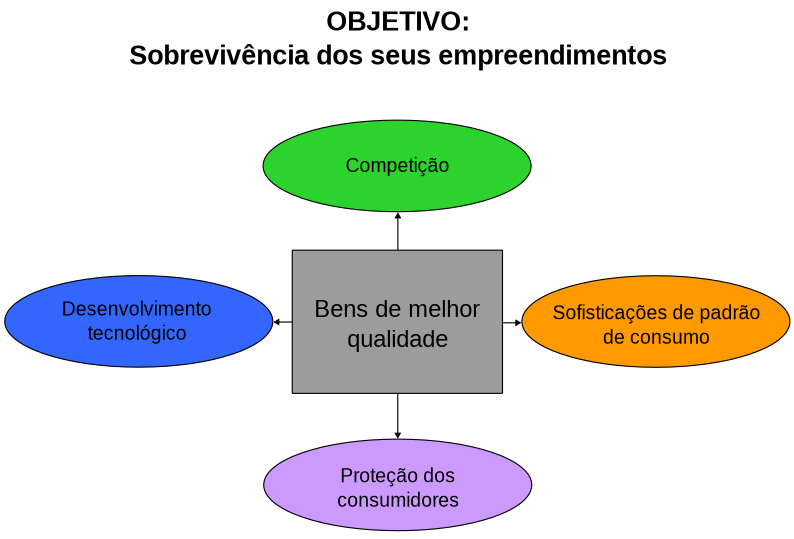
Figure 1.1.2: Diagram of reliability and quality of projects