On this page
13.4 Accelerated Stability
Traditional accelerated study
The accelerated stability study is conducted to evaluate possible physical, chemical and microbiological changes in active pharmaceutical ingredients (APIs) and medicines when subjected to storage conditions more severe than those recommended for long-term storage. The results obtained provide preliminary information about the stability profile of the product and help in defining the Retest Period for IFA’s and the Shelf Life for the medicines.
Furthermore, accelerated studies allow evaluating the potential impact of temporary excursions outside recommended storage conditions and identifying possible risks related to product degradation during its life cycle.
The study must be carried out as provided for in the stability protocol, and is normally evaluated at 3 and 6 months. When significant changes are observed during the accelerated storage period, determination of the interim shelf life should be based on evaluation of available data from the long-term stability study.
According to RDC nº 318/2019 and the ICH guides, examples of significant changes include:
- Reduction equal to or greater than 5% in content in relation to the initial value;
- Results outside the established specification limits;
- Significant change in the chromatographic profile;
- Formation or increase of degradation products above acceptable limits;
- Mass loss equal to or greater than 5% in three months for pharmaceutical forms susceptible to moisture loss.
The statistical procedure to evaluate whether or not there were significant changes in content:
$$ \text{Diferença} = \frac{| y_0 - y_6 |}{y_0} \cdot 100 % $$
where:
- $y_0$: represents the response observed at the initial time;
- $y_6$: represents the response observed over 6 months.
Importance of Accelerated Study in Defining the Expiry Date
Accelerated stability studies were developed to provide information about the behavior of the product over a shorter period of time, through exposure to more severe temperature and humidity conditions than those used in long-term studies. As long-term studies can require several years to complete, the data generated in the accelerated study allows for an initial assessment of product stability and assists in decision-making during development and regulatory registration.
Although the definitive shelf life must be based primarily on the results of long-term studies, data from the accelerated study provide preliminary evidence about the potential for product degradation. When no significant changes are observed during the six months of accelerated storage and available data from the long-term study demonstrate consistent behavior, an interim shelf life may be proposed, which will be further confirmed or adjusted as new long-term results become available.
In this way, accelerated studies serve as an important predictive tool, allowing early identification of potential stability issues, assessment of formulation and packaging robustness, and support for regulatory decisions while long-term studies remain ongoing.
Example
In order to exemplify the accelerated stability test, consider the data set found in Table 13.4.1, which contains batch, time and concentration information.
| Lot | Time | Concentration |
|---|---|---|
| 1 | 0 | 101,6158 |
| 1 | 3 | 99,2922 |
| 1 | 6 | 99,0759 |
| 2 | 0 | 98,2554 |
| 2 | 3 | 99,7440 |
| 2 | 6 | 98,0102 |
| 3 | 0 | 101,5333 |
| 3 | 3 | 106,0825 |
| 3 | 6 | 103,8474 |
Table 13.4.1: Data for the accelerated stability test
To find out whether there was a significant change in the period from 0 to 6 months of the accelerated study, it is assessed whether the difference in concentration is equal to or greater than 5% in the period.
Difference for batch 1:
$$ \text{Diferença} = \frac{|y_0 - y_6|}{y_0} \cdot 100 % = \frac{|101,61584200 - 99,07597340|}{101,61584200} \cdot 100 % = 2,4995% . $$
Difference for batch 2:
$$ \text{Diferença} = \frac{|y_0 - y_6|}{y_0} \cdot 100 % = \frac{|98,25541729 - 98,01020726|}{98,25541729} \cdot 100 % = 0,2496% . $$
Difference for batch 3:
$$ \text{Diferença} = \frac{|y_0 - y_6|}{y_0} \cdot 100 % = \frac{|101,61584200 - 99,07597340|}{101,61584200} \cdot 100 % = 2,2791% . $$
The Action Stat outputs follow:
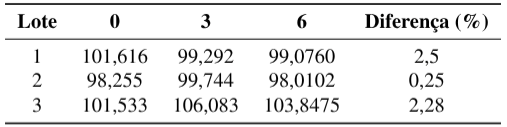
Figure 13.4.1: Significant change assessment
The existence of results outside the specification is also assessed.
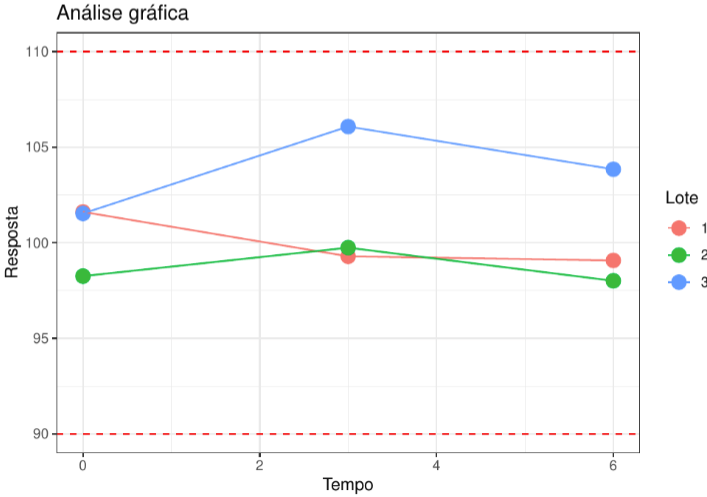
Figure 13.4.2: Comparison with the specification